How Accurate Are Online Baybayin Translators?
Online Baybayin translators are becoming more popular every year. Many people use them to create tattoos, artwork, logos, social media names, and even school projects. But one important question remains: How accurate are online Baybayin translators?
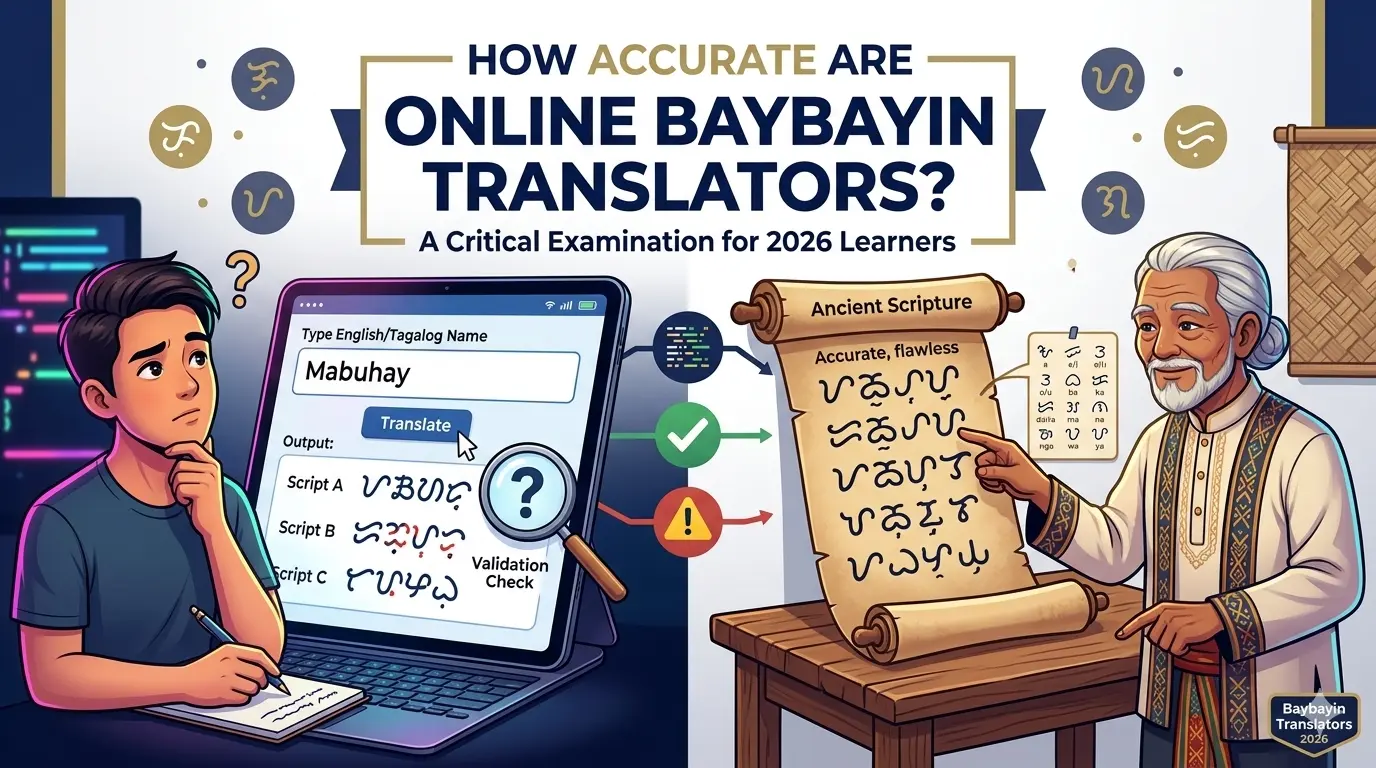
The short answer is that some are helpful, but many are not fully correct.
If you want to use Baybayin for a tattoo, design, or personal project, it is important to understand how these translators work and where mistakes can happen. In this guide, we will explain everything in simple words so anyone can understand it.
How Does an Online Baybayin Translator Work?
A Baybayin translator generally takes your input and converts it into a form that can be represented using Baybayin characters.
A good conversion process should consider:
- The pronunciation of the word
- Syllable structure
- Vowel sounds
- Kudlit or vowel marks
- Consonant sounds
- Consonant endings
- The Baybayin convention being used
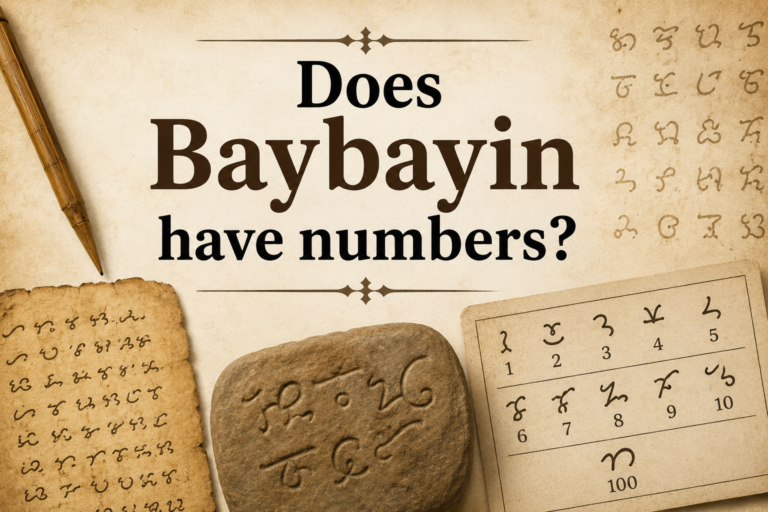
Understanding the Baybayin alphabet can also help you see how sounds, vowels, and kudlit marks are represented.
Are Online Baybayin Translators Really Accurate?
Online Baybayin translators can be useful, especially for simple words with clear pronunciation. However, results may vary for unfamiliar names or English words because spelling does not always match pronunciation.
Different translators may also use different rules for syllables, pronunciation, and consonant endings, which can lead to different results.
Translation vs. Transliteration: What Is a Baybayin Translator Actually Doing?
Translation changes the meaning of text from one language to another, while transliteration represents words in a different writing system.
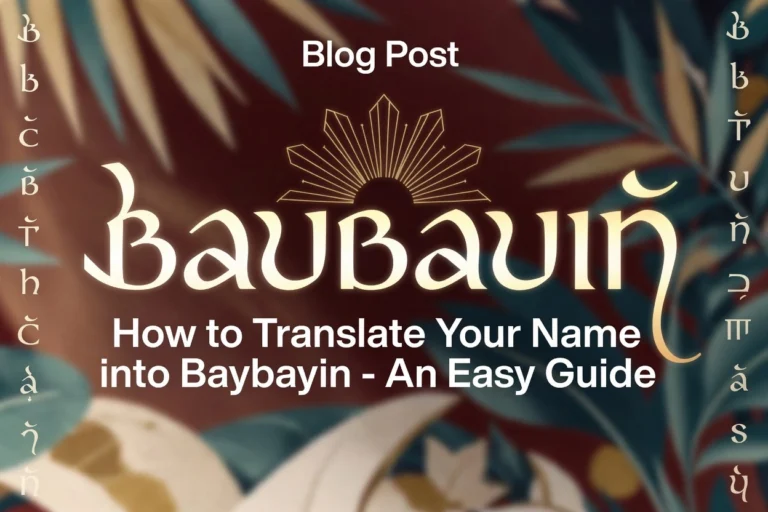
When a name such as Michael is converted into Baybayin, its pronunciation is represented rather than its meaning translated. For this reason, How to Translate Your Name into Baybayin can help explain how names are represented in Baybayin. Baybayin transliteration is a more technically accurate term for what these tools do.
Why Can Baybayin Translators Give Different Results?
There are several common reasons.
1. English spelling can be complicated
English contains silent letters and unusual spelling patterns. A translator that relies heavily on spelling may produce a different result from one that considers pronunciation.
2. Baybayin is syllabic
Baybayin characters represent syllabic sounds rather than individual English letters. This means a word needs to be considered as sounds and syllables rather than simply as a sequence of letters.
3. Consonant endings can be difficult
Words ending in consonants require particular attention. Different historical and modern Baybayin conventions handle vowel cancellation and final consonants differently. As a result, two translators may use different approaches while still following a recognizable convention.
4. Names are often harder than common words
Names from English and other languages can contain sounds or spelling patterns that do not have a straightforward representation in Baybayin. Such as F, V, Z, X, and C, along with silent letters, can make direct translation less reliable.
5. Input, Font, and Cultural Context Matter
Typing mistakes, missing vowels, or incorrect spacing can affect the result. Decorative fonts can also make Baybayin difficult to read. Before using a translation for a tattoo, logo, or other permanent design, always double-check the spelling, meaning, and cultural context.
How to Check Whether a Baybayin Translation Is Accurate
Before using a generated Baybayin result, especially for something permanent, check the following:
1. Check the pronunciation
Say the original word or name aloud. Make sure the Baybayin version is intended to represent the pronunciation rather than simply the spelling.
1. Check the syllables
Look at how the word is divided into syllables. Baybayin’s structure makes syllable awareness important.
2. Check the vowel marks
Make sure the vowel modifications match the intended sounds.
3. Check consonant endings
If the word ends in a consonant, find out which convention the translator uses to represent it.
4. Compare with reliable references
For important uses, compare the result with trustworthy information about Baybayin rather than relying on a single automated tool.
How Our Baybayin Translator Approaches Transliteration
Our Online Baybayin Translator tool is designed to address the common limitations found in many online Baybayin translators, especially when dealing with modern and complex inputs.
Unlike many tools that prioritize speed over accuracy, ours is designed to give more reliable and rule-based Baybayin translations.
When Are Baybayin Translators Most Accurate?
Online Baybayin translators usually work best with:
- Simple Filipino words
- Short names
- Basic Tagalog phrases
- Clear pronunciation
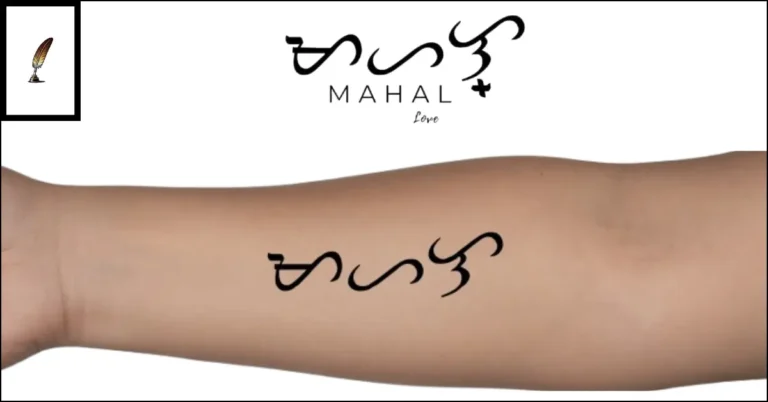
Examples: Mahal, Ganda, Tala, Araw, Lakas
These are easier to convert because they match the original sound patterns used in Baybayin writing.
Should You Trust a Baybayin Translator for Tattoos?

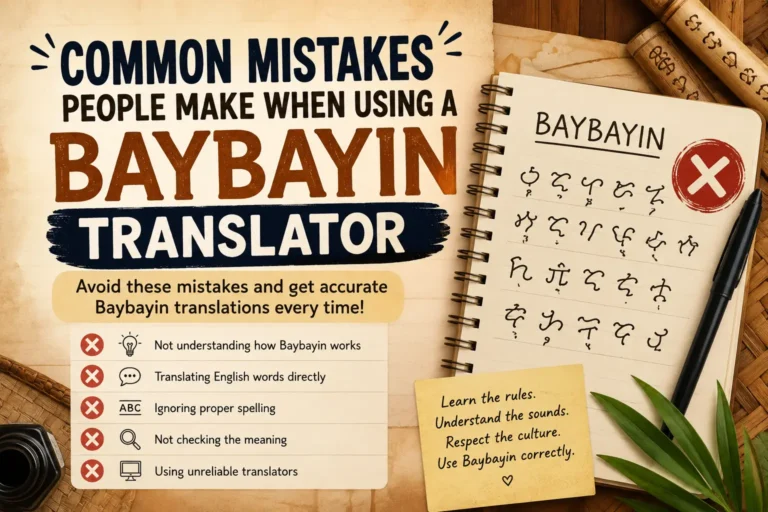
You should be careful before using any online Baybayin translator for tattoos. A tattoo is permanent, so even a small mistake can become a lifelong problem. Before getting a tattoo, make sure to read our detailed article on Baybayin tattoos and carefully follow the following steps:
- Verify the translation with multiple sources
- Use our Baybayin Translator Name Generator for accurate results.
- Ask a Baybayin expert or native speaker
- Use pronunciation-based spelling
- Check syllable breakdown carefully
- Compare modern and traditional versions
Many people discover translation errors only after the tattoo is already done.
Tips for Getting Better Baybayin Translations
Use Filipino pronunciation.
Instead of typing difficult English spellings, type the word how it sounds.
Example:
- “Michael” → “Maykel.”
- “Jessica” → “Jesika.”
This often produces more accurate Baybayin output.
Compare Multiple Translators
Different websites use different systems. Checking several tools can help you spot mistakes and choose the best version.
Learn Basic Baybayin Rules
Even learning the basics of Baybayin can help you avoid major translation errors.
Focus on:
- Vowels
- Kudlit marks
- Syllables
- Ending consonants
A little knowledge goes a long way.
Final Thoughts
So, how accurate are online Baybayin translators? The answer is that they can be useful, fast, and fun, but they are not always perfect. Most tools work well for simple Filipino words, but they may struggle with English names and complicated spelling.
If you plan to use Baybayin for tattoos, branding, artwork, or personal projects, always double-check the translation carefully.
Baybayin is more than just beautiful writing. It is an important part of Filipino culture and history. Using it correctly helps preserve its meaning for future generations.
FAQ About Online Baybayin Translators
Are free Baybayin translators accurate?
Some are decent for basic words, but not all follow traditional Baybayin rules correctly.
Can Baybayin translate English words?
Yes, but accuracy depends on pronunciation and syllable conversion.
Which Baybayin translator is best for tattoos?
The best approach is to combine an online translator with human verification.
Why do different translators give different results?
Some tools use modern Baybayin, while others follow traditional writing systems.
Is Baybayin still used today?
Yes. Many Filipinos use Baybayin in art, tattoos, education, and cultural projects.