
Baybayin Alphabet: Learn to Read and Write Baybayin Easily
The Baybayin Alphabet is a beautiful and ancient writing system from the Philippines. At first, it may look difficult, but once you learn the basics, it becomes fun and surprisingly simple. Looking to write a specific foreign name or personal name? Check out our dedicated step-by-step guide on How to Translate Your Name into Baybayin.
If you’re interested in how this ancient writing system developed, you can also learn more about the Baybayin’s history and its cultural significance.
What is the Baybayin Alphabet?
The Baybayin Alphabet is made up of 17 basic symbols:
- 3 vowels (Mga Patinig)
- 14 consonants (Mga Katinig)
Unlike English, Baybayin is based on sound, not spelling. That means you write words the way they are pronounced.

Vowels (Mga Patinig)
There are only three vowel sounds in Baybayin:
- a
- e/i
- o/u
You might wonder why:
- “e” and “i” use the same symbol
- “o” and “u” share another
This happens because these sounds are very close when spoken in Filipino languages.
Example:
- “tolong” (help) and “tolang” sound almost the same
- “piso” (money) and “pise” also sound alike
- “gising” (awake) and “giseng” are pronounced similarly
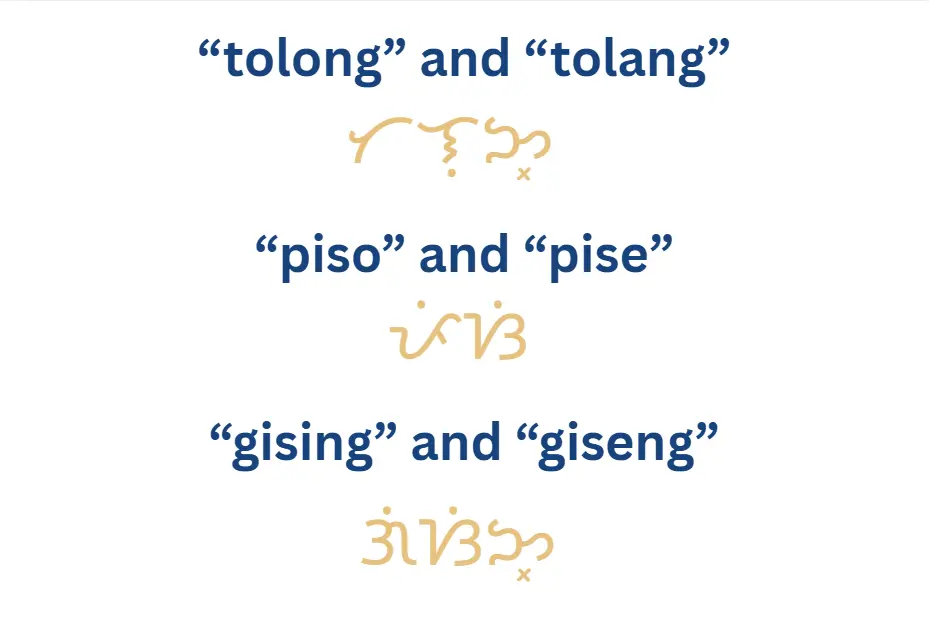
In the Baybayin Alphabet, what matters most is how the word sounds, not how it is spelled.
Simple tip: Write what you hear!
Kudlit (The Sound Changer)
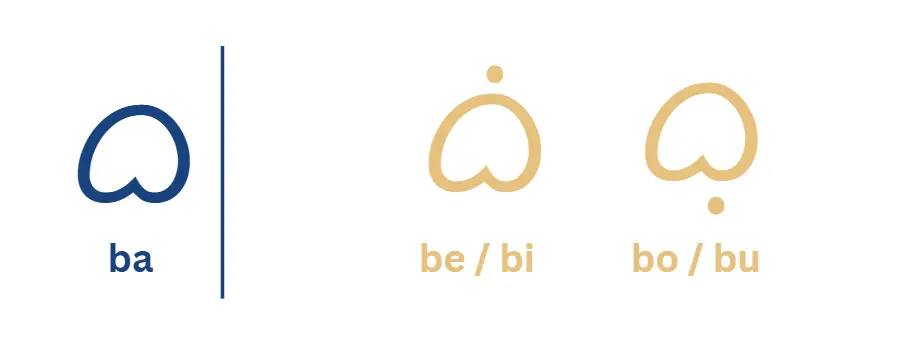
The kudlit is a small mark that changes the vowel sound of a consonant. It may look like a dot or a short line, but it plays a big role.
How it works:
- No mark → “a” sound
ba, ka, da - Mark above → “e” or “i”
ba → be / bi - Mark below → “o” or “u”
ba → bo / bu
Pamudpod (Removing the Vowel)
There is also a special mark called the pamudpod (a small cross or line under the symbol).
This removes the vowel sound completely:
- ba → b
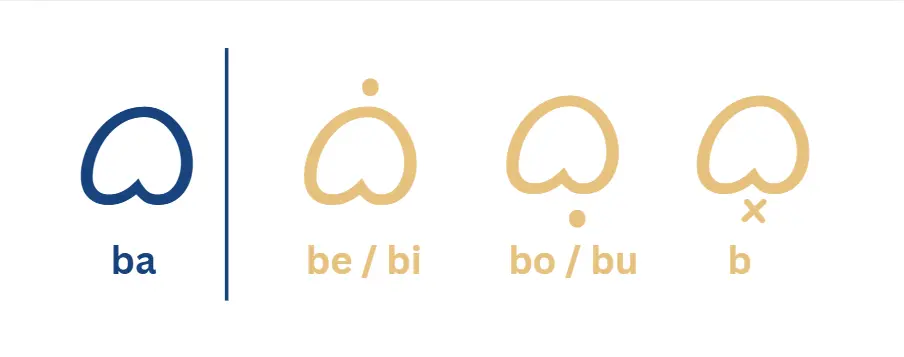
Now it becomes a pure consonant.
Quick Memory Guide
- No mark = a sound
- Mark above = e / i sound
- Mark below = o / u sound
- Cross mark = no vowel
Vowel symbols don’t need any marks—they already have their own sounds.
Consonants (Mga Katinig)
The 14 consonants are the main building blocks of the Baybayin Alphabet. Each one naturally includes an “a” sound unless changed by a kudlit.
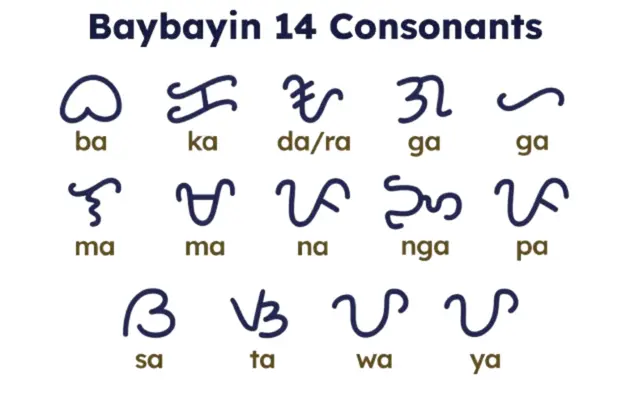
The key to learning them is simple:
Practice and repetition
The more you read and write, the faster you recognize each symbol.
Practice with a Baybayin Translator
One of the easiest ways to learn is by using a Baybayin translator. If you’re wondering about the reliability of these tools, learn how accurate online Baybayin translators can be before relying on their results.
It helps you:
- Convert words into Baybayin instantly
- Understand how sounds match symbols
- Practice without memorizing everything at once
You can also try a Baybayin name generator to write your name—it’s fun and motivating!
Practice Words
Start with simple words:
- Practice Words & Names Start practicing with simple native words before moving on to names:
- anak (child)
- mahal (love)
- puso (heart)
- Ready to try complex Western names? Read our guide on Translating Names into Baybayin to learn how to handle silent letters and trailing consonants.
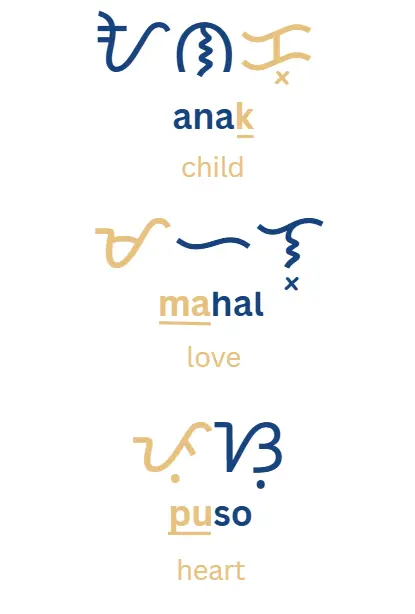
Say each word out loud.
Break it into syllables.
Then write it in Baybayin.
Why Learning Baybayin is Fun
Learning the Baybayin Alphabet is not just about writing—it’s about creativity and culture.
You can use it for:
- Writing your name in a cool way
- Creating art, designs, and tattoos
- Sending secret messages to friends
Final Thoughts
The Baybayin Alphabet is simple once you understand the basics. Focus on sounds, practice regularly, and use helpful tools like a Baybayin translator to guide you.
Start small, enjoy the process, and don’t worry about mistakes. With time, you’ll be able to read and write Baybayin with confidence!